01\12\2011
Written by Jurriaan
Congo in Aerochrome
Irish photographer Richard Mosse has spent the last seven years in disaster-stricken areas, ranging from postwar Yugoslavia to post-earthquake Haïti. Although these subjects addressed by Mosse usually have to do with brutal forces – both man-made and natural – the large format photographs show a keen eye for composition and a talent to unveil the beauty behind such violence. With his unconventional approach Mosse is questioning the solid foundations of documentation photography.
Written by Anneloes Bakker
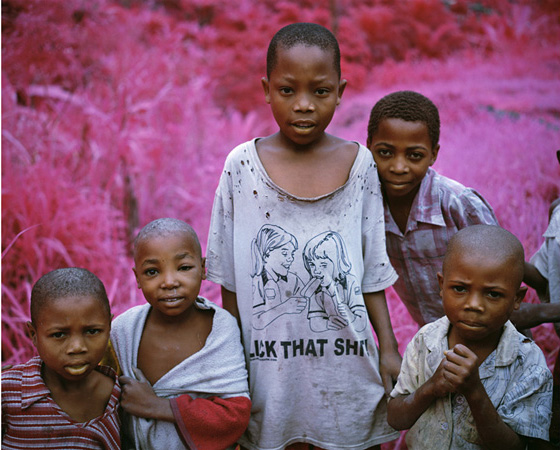
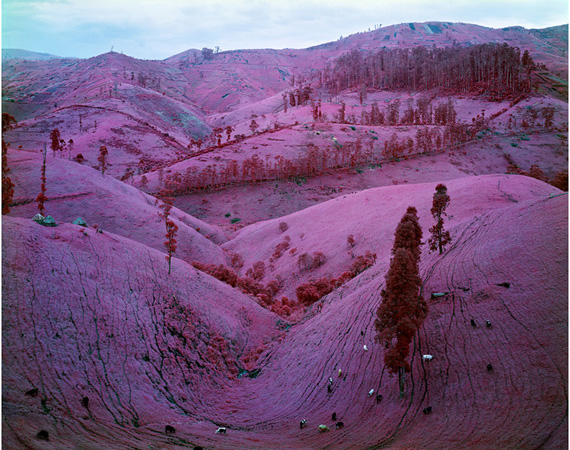
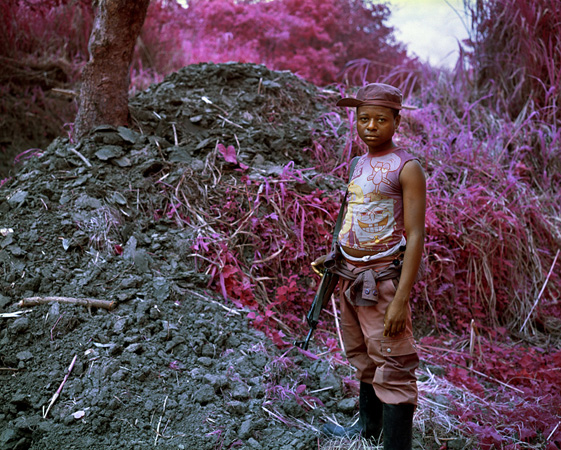
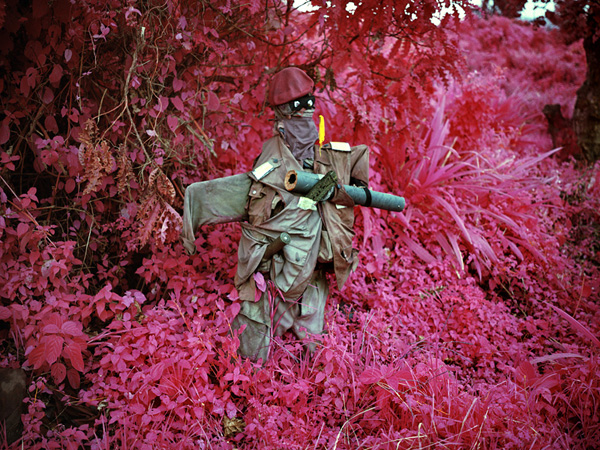
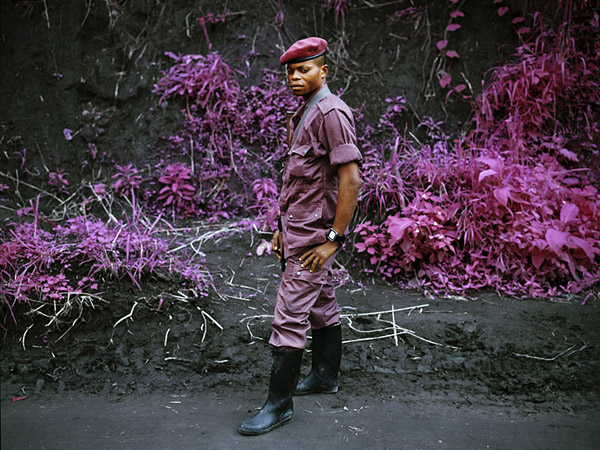
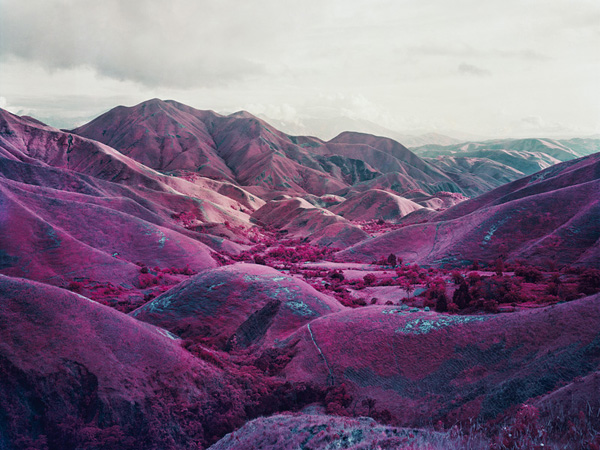
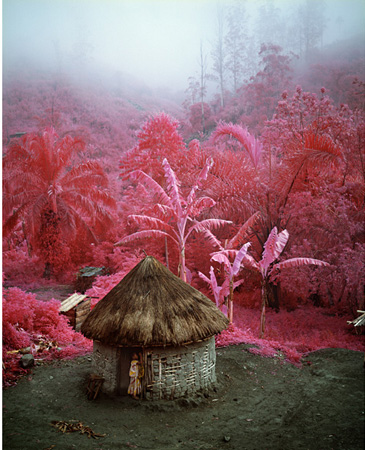
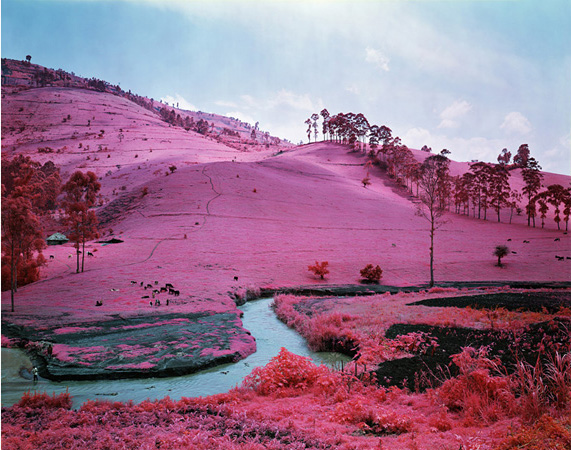
This is especially true for the ‘Infra’ series (2010). Contrary to what you might think, these images are not the result of some savvy photoshopping. In fact, Mosse turned to an abandoned piece of technology known as Aerochrome. This is a certain infrared film which was developed by the US military in 1940’s in order to differentiate the camouflaged enemy from their natural surroundings.
With the use of this technique green pigmentation in plants turns pink. As a result the pictured landscapes appear to be overgrown with cotton candy.
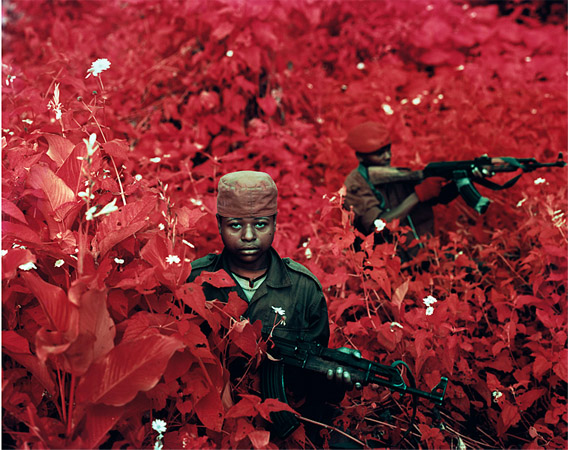
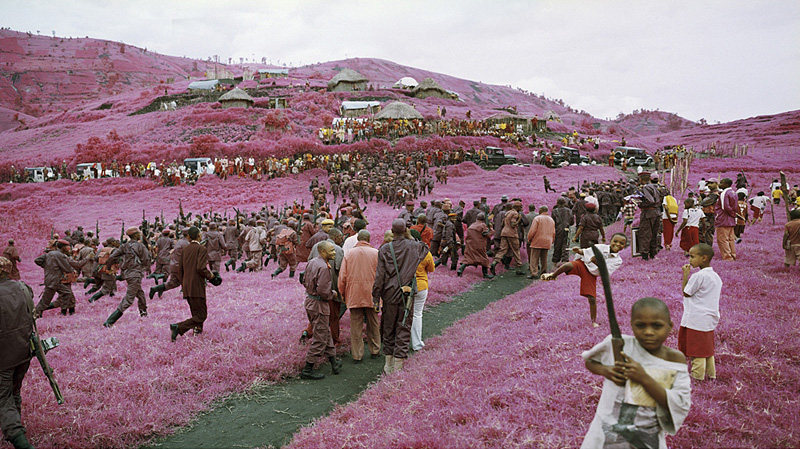
‘Infra’ shows the integration of the rebels from the National Congress of Defense of the People (CNDP) into the Congolese national army as a result of a shaky truce between Congo and Rwanda. The rebels united in 2006 after several failed attempts at peace – Congo had been at war since 1996 – and claimed self-defense in an attempt to justify the excess of violence on their side. After the insurrection of the CNDP, several counter-rebellions were brought into existence, turning east-Congo (roughly the size of England) into a battlefield. The neighboring country Rwanda supporting the CNDP and thousands of people were killed, and over 100,000 women were raped in 1996 alone.
These bare statistics and brutal facts are usually what fuels any discussion about Congo. Since the truce the fighting lessened somewhat, however the CNDP still holds a lot of power and is even expending to mineral-rich areas as the army itself is weak.
In his alienating series, Mosse tried to create a different view on the violent history of Congo, by bathing the ravaged landscape in shocking pink, which shows an uncanny contrast with its violent inhabitants. The resulting works are almost abject: we find ourselves drawn to the beautiful, alienating colors and the strong composition. However, the guns and the violence are off putting. It is almost as if the boys and men – dressed in uniforms but also in t-shirts with popular cartoon characters such as Spongebob – are playing soldier in a fantasy world. Unfortunately it is – aside from the faux pigmentation – very real.
For more on Richard Mosse, visit his website.